


A Daughter, a Psalm, and a Promise

Fifty years ago, practically to this very minute, I was reading Psalm 66 as my daily discipline. It’s what I still do – working through all 150 psalms, and then starting all over again.
But this Saturday morning, it was different.
It was 1976: I was a final year theological student at Durham with Jacqui pregnant with our second child. It had been a difficult few months. She had had blood pressure problems in having Deborah two years earlier but this time it was worse, requiring several admissions into hospital to prevent preeclampsia.
Eventually her obstetrician decided to induce delivery at 38 weeks, just two weeks before term. Clearly a worrying time.
That day it was Psalm 66, a song of joy and celebration:
Shout for joy to God, all the earth!Sing the glory of his name;make his praise glorious.(v1f)
You may know how sometimes a text lights up; it seems to jump out of the page. And that morning it was verse 12, in what was then the New Revised Standard Version: “We went through fire and through water; yet you have brought us out to a broad place.”
I took it to mean that we had had a tough time – yes, we had been through fire and water. But we could be assured of a good outcome, even blessing.
So I began my walk to Dryburn Hospital, somewhat earlier than I was advised. In those days you had no idea of the baby’s gender and so we had chosen two names: Jonathan and Sharon.
On arrival I discovered that they had started the induction earlier than planned – and things weren’t going well. Jacqui’s blood pressure was beginning to climb. So I held onto that text as a promise: “We went through fire and through water; yet you have brought us out to a broad place.”
I began to get really worried when I could see that the midwives were becoming alarmed. I remember asking God for reassurance and in my mind the text shortened: “Yet you have brought us out to a broad place.”
However, if this text was authentically given by God, I realised we needed support there and then. Looking back some days later wasn’t what we needed: we needed reassurance in real time. (Incidentally, I recall wondering how God was going to do this as I sat there in the delivery suite watching the action.)
Then the young doctor appeared, clearly worried. He decided such was Jacqui’s BP that they would use intravenous Valium despite several important risks for both mother and baby.
At this point the text in my mind shrank to just two words: broad place. This seemed totally meaningless. What on earth does broad place have to do with a difficult delivery?
Then it dawned on me.
The Hebrew word for broad place is Sharon. And so I leaned over to inform Jacqui as she was losing consciousness that she was about to have a little girl and that everything would be okay. So when baby Sharon appeared and the doctor told me we had just had a little girl, I simply replied: “I know. Her name is Sharon!”
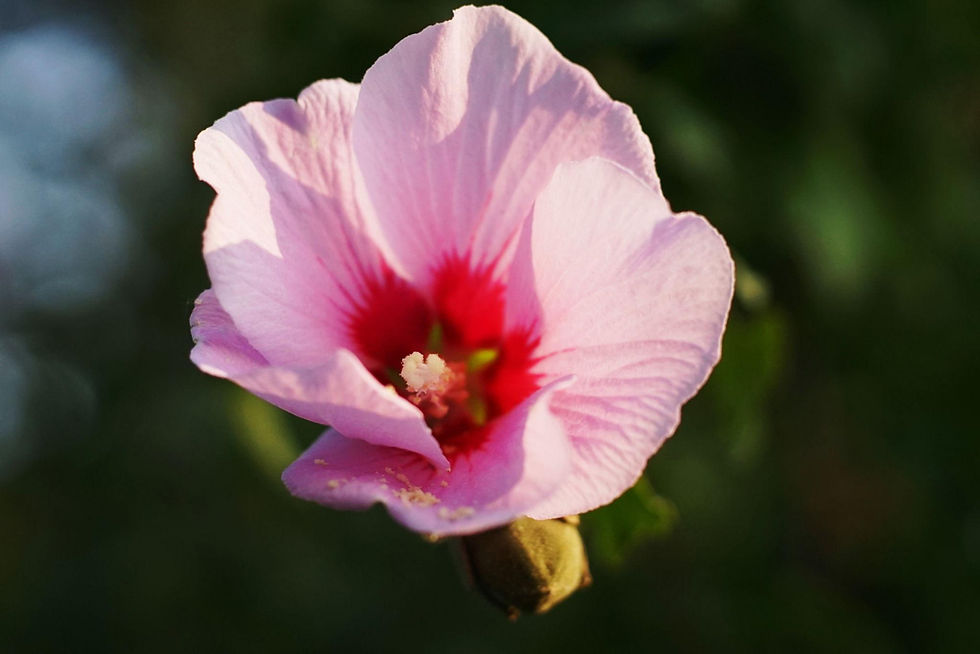
Later that week our vicar visited Jacqui and on being told the baby’s name burst into song: “I am the rose of Sharon, and the lily of the valleys.” This is a direct quote from the Old Testament book, Song of Solomon (2:1).
And some 21 years later Sharon selected as her MA in Hebrew at Durham the Song of Solomon. Such is her love of the Hebrew language, its stories and poetry, she decided to become a Hebrew academic later teaching the subject at Cuddesdon college, Oxford.
Just to clarify, at the time I thought the Hebrew word for broad place was Sharon. Not quite. The Psalmist is picturing a place of God’s blessing, which would be the fertile plain of Sharon in Israel, a wide, open, well-watered space in contrast to the constriction of trial and danger.
I’ve just come across an expanded translation of the verse: “The God who has walked with you through fire and water is also the God who is leading you into your Sharon—a place of space, renewal, and quiet fruitfulness.”
But here is the thing. In the moment, I did not need a Hebrew lexicon. I needed a living word. And God, in his kindness, met me not with technical precision but with personal assurance. The text narrowed, then opened. It seemed to lose meaning, only to gain it at a deeper level. What looked like confusion became clarity. What felt like desperation became quiet confidence.
And isn’t that often how God works? Not by giving us full explanations in advance, but by giving us just enough light for the next step. A phrase. A nudge. A strange, persistent conviction that refuses to go away.
Looking back, I can see that the “broad place” was not simply the safe arrival of a baby—though it was that, thank God—but the widening of faith in the midst of pressure. The discovery that God is present not only in the outcome, but in the uncertainty itself.
Fifty years on, I still read the Psalms. I still come across that verse. But now it carries a name, a face, a story.
And whenever life tightens again, as it does, I find myself returning to it—not as a theory, but as testimony: God brings us through the narrow place… into a place wide enough for grace.


Comments