


Great idea, Sandy!

,
It’s 1985. We’re visiting friends in central London, staying in their vicarage. Their curate is about to move—but to where? An idea is beginning to take shape, even a fresh way of doing ministry: what if he didn’t go alone? What if a whole group went with him, to breathe life into a struggling church?
My response? “Great idea, Sandy!”
And that, as it turns out, may be my principal contribution to the Church of England.
I know this because I have just read a long article in this week’s Economist, in its 1843 series, about the CofE, entitled “The battle for the soul of the Church of England.”
The Economist is generally both dismissive of and intrigued by our national church—and I wondered what take this long read would offer. Clearly a major article, with lots of photographs as well as a 5,400-word count.
Much of the article was predictable: an archaic institution in steady decline. “The church has been in crisis for decades: a collapse in the number of churchgoers, hundreds of child-abuse cases and increasingly hostile battles between liberals and conservatives.”
Nevertheless, such is the status of our national church that The Economist decided to devote some 5,400 words to its decline, as well as 22 photographs. Twenty-two! The Economist doesn’t do photographs.
Moreover, you can always rely on members of the CofE for some great quotes. How about this one from a retired bishop? “The General Synod is like a Conservative Party conference without the same sense of mutual affection.” Wonderful.
And one fascinating fact: “Britain is the only country besides Iran to grant clerics automatic seats in its legislature—bishops have sat in Parliament since it was established in the 14th century.”
Nevertheless, as Linda Woodhead, Professor of Sociology at King’s College London, puts it, the church is “bound up with what it is to be English.”
So we are introduced to the Clun Valley in the Diocese of Hereford, described by A. E. Housman as one of the “quietest places under the sun.” Here are five rural parishes. “This is what the Church of England looks like on the edge of the map: ancient, impoverished and stubbornly alive.” Here the CofE, despite everything, refuses to keel over.
Incidentally, I once heard the then Bishop of Hereford describe his entire diocesan strategy in just seven words: “Make good appointments, make no bad appointments.” Right on.
However, I’m going on and in danger of running out of space. So what was the basic thrust of the article? Essentially, the huge influence of Holy Trinity Brompton, the church of my opening paragraph, and its “church-planting” charity, Revitalise Trust which has birthed about 200 plants. This, in the view of the article, is now a major feature of our national church. Some 43% of all central church-planting funds in the Church of England have gone to projects led by or in collaboration with Revitalise Trust.
But The Economist doesn’t quite get it—strange, considering its background in economics, where innovation and bold initiatives are prized. So it gives the example of an HTB church plant in Rochdale. Here, it reports somewhat disapprovingly, the church spent a fortune transforming Red Hot World Buffet, a Chinese restaurant, into a place of worship, though a 12th-century parish church was a short walk away.
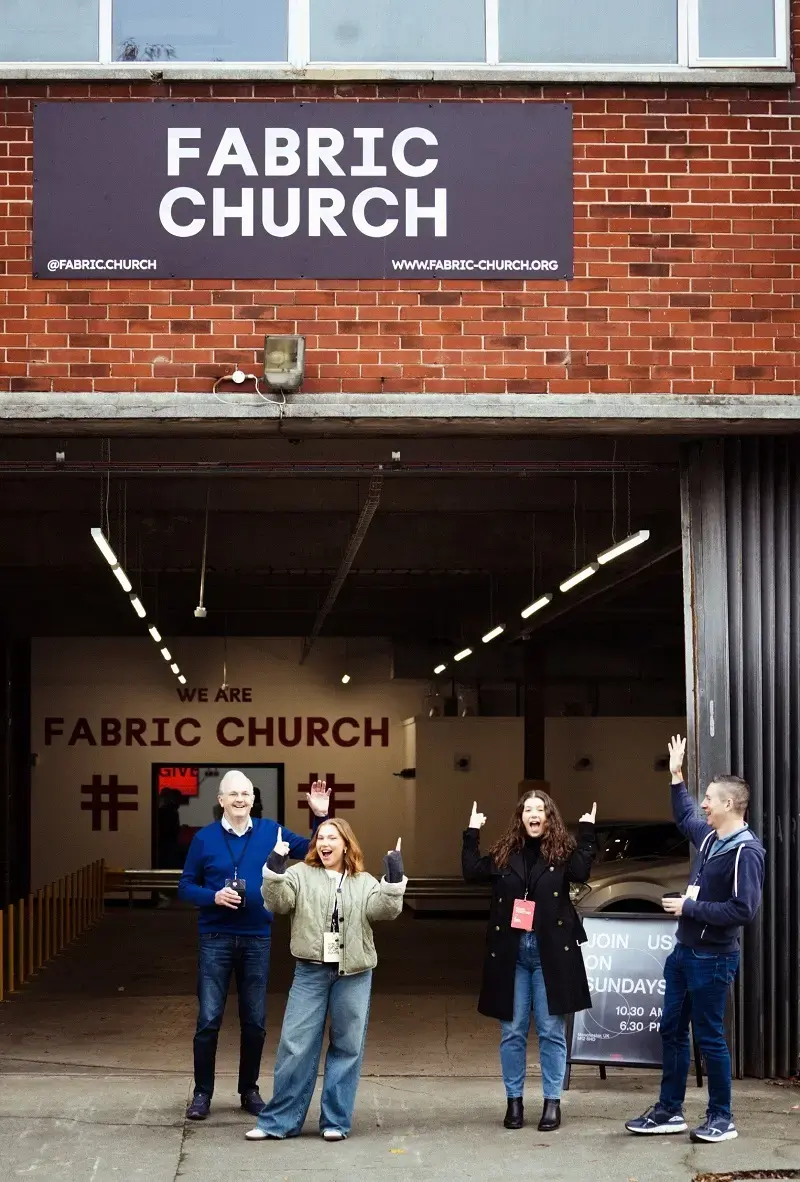
Just down the road in Manchester, another plant made in 2022, the Fabric Church, now meets in an old army barracks, following a £3.4m grant from a central church fund. The Economist journalist, the splendidly named Georgia Banjo, attended their Sunday morning service but clearly didn’t get it. “200 people sang, swayed and murmured as a singer, accompanied by drums and an electric guitar, called for the end of the world: Let heaven come to earth…”
She concluded, somewhat begrudgingly: “HTB may be Anglican by licence, but its joyful, participatory worship feels almost Pentecostal.” But from her detached perspective, it’s the future—albeit from her perspective an unwelcome one. She observes, somewhat darkly: “As the pensioners of Hereford pass away, it is HTB’s church that will remain.”
Not that HTB is without its critics. The article gives great play to its apparent links with right-wing Americans, as well as its disregard for Anglican liturgy.
However, Banjo freely admits: “HTB does seem to make a positive difference to people’s lives.” She concedes that when visiting the Fabric Church, “Roper (the church leader) and his congregation were kind and welcoming.” She also, somewhat reluctantly, acknowledges that such church plants are made in partnership with dioceses. So Roper was ordained by Mullally, who, as Bishop of London, worked closely with HTB. The takeover has not been so much resisted as invited.
As it happens, only this week the ancient parish church in Ormskirk, with the full endorsement of the Diocese, is entering into a church-planting partnership with the HTB plant at Penny Lane Church. From my perspective, a huge opportunity to be realised, even an answer to the sustained, daily Anchorhold prayer meeting.
Or, to borrow my own words from that London vicarage in 1985: "a great idea.”


Comments