


174: The number Keir Starmer should fear

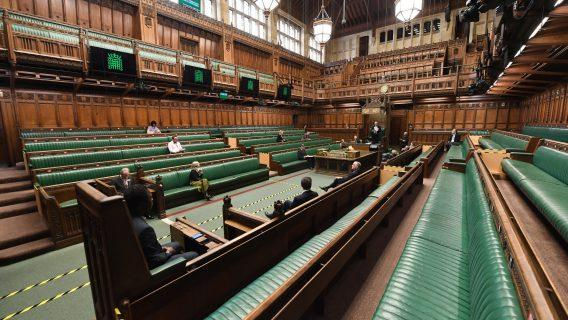
Keir Starmer's biggest problem is not the 24,927 votes cast for his rival Andy Burnham in yesterday's by-election at Makerfield, but the number 174—Labour's majority in the House of Commons, the second largest of the past fifty years.
Large majorities create their own dangers, and not just in politics. As the former Conservative politician Michael Heseltine warned many years ago, overwhelming parliamentary majorities can breed arrogance, poor decision-making and a growing sense that a government is beyond challenge. They also weaken party discipline, as MPs become less fearful that rebellion might bring down the government. We are beginning to see some of that today.
I'm old enough to remember Harold Wilson's fourth administration, elected in October 1974 with a majority of just three, reduced to two after John Stonehouse's extraordinary attempt to disappear.
Every Labour MP knew they could not afford to rock the boat. One lost vote could trigger a general election and hand power to the Conservatives. It was a classic case of turkeys not voting for Christmas.
Nor is this simply a British phenomenon. Richard Nixon was re-elected in 1972 in one of the greatest landslides in American history, carrying 49 of the 50 states. His overwhelming mandate appeared to give him almost unlimited authority. Yet within two years he had resigned in disgrace over Watergate.
A landslide victory can confer immense power, but it can also encourage overconfidence and weaken the restraints on which good government depends.
The same principle appears in sport. This week, at the FIFA Club World Cup, Cape Verde held Spain to a goalless draw. On paper Spain should have won comfortably. They possess vastly greater resources, world-class players and a footballing pedigree that Cape Verde could only admire.
But football is never played on paper. Success can create expectation and even complacency, while the underdog often plays with discipline, determination and absolutely nothing to lose.
Above all, however, the lesson applies to the Church.
Whenever the Church becomes too closely allied with political power or material wealth, spiritual decline is never far behind.
The first three centuries of Christianity were marked by weakness, persecution and astonishing growth. As the apostle Paul reminded the Corinthians: "Brothers and sisters, think of what you were when you were called. Not many of you were wise by human standards; not many were influential; not many were of noble birth." (1 Corinthians 1:26)
After Emperor Constantine's conversion in AD 312, Christianity gained imperial favour, wealth and influence. Much good undoubtedly followed. Yet political power increasingly became intertwined with the gospel, and over succeeding centuries the Church gradually lost its spiritual focus. Bishops became princes, popes commanded armies, enormous wealth accumulated, and church offices were sometimes bought and sold.
History repeatedly demonstrates that when the Church seeks influence through political patronage or financial security, it often gains worldly success at the cost of spiritual authority.
It is all too easy to become like the Spanish football team—strong on paper but strangely ineffective where it really matters.
Ironically, one of the greatest movements in world history may be taking place almost unnoticed by the Western media: the remarkable growth of Christianity in China.
Since the Communist Revolution of 1949, and especially during the Cultural Revolution, Christians have endured repeated waves of persecution. Just this week, one of China's best-known house churches, Early Rain Covenant Church, was raided by dozens of police officers. Elders, ordinary members and even children were detained simply for gathering to worship. Its pastor, Wang Yi, remains in prison.
Yet many observers believe that China could, within a generation, have the largest Christian population in the world.
That should greatly encourage those of us whose churches appear weak by worldly standards.
Paul wrote:"That is why, for Christ's sake, I delight in weaknesses, in insults, in hardships, in persecutions, in difficulties. For when I am weak, then I am strong." (2 Corinthians 12:10)
Paul's point is not that weakness is desirable in itself. Rather, our weakness becomes the stage on which God's strength is most clearly displayed. When we feel self-sufficient, we naturally rely upon ourselves. When we know our weakness, we are driven back to Christ.
That has practical consequences. The Church should never seek political influence simply for its own sake, nor should it place its confidence in healthy bank balances. I know of one parish where a friend was vicar that received a gift of £1 million. Amazingly, the churchwardens wanted to keep the existence of the money secret. Instead of becoming a blessing, it became a source of division and anxiety.
I often think back to Christ Church when we voted to build the Ministry Centre. The project eventually cost around £1.3 million, yet we had only about £35,000 in the bank. Humanly speaking, the figures made little sense. We had no option but to depend upon God's faithfulness.
Looking back, I sometimes wonder whether we would have shown the same courage if we had already possessed £1 million in the bank. Would we really have had the faith to spend it all in one go? Or would our apparent strength have made us more cautious than our weakness ever did?
Perhaps that is the great paradox of the Christian life. God often accomplishes his greatest work, not through those who possess the most influence, the greatest wealth or the largest majorities, but through those who know they cannot succeed without him.
Weakness, in God's hands, is never a disadvantage. Very often it is his chosen instrument.


Comments